
…We also glory in our sufferings, because we know that suffering produces perseverance; perseverance, character; and character, hope --Romans 5:3-4
--Romans 5:3-4

A man of many companions may come to ruin, but there is a friend who sticks closer than a brother.
--Proverbs 18:24
Elisa's Friend
Elisa has had a long, intimate, and painful education in suffering. She certainly didn’t ask for it, and the way I see it, she didn’t deserve any of it. Job’s counselors would have argued otherwise. They would have expostulated ad infinitum about retributive justice or some other formula that puts God in a box. Some theologians might argue that, in one way or another, we all deserve to suffer. But I would wager that if either Job’s counselors—or those theologians—had suffered as Elisa has, they might have learned something about when to keep quiet. But you tell me what you think. I’ll tell you her story.
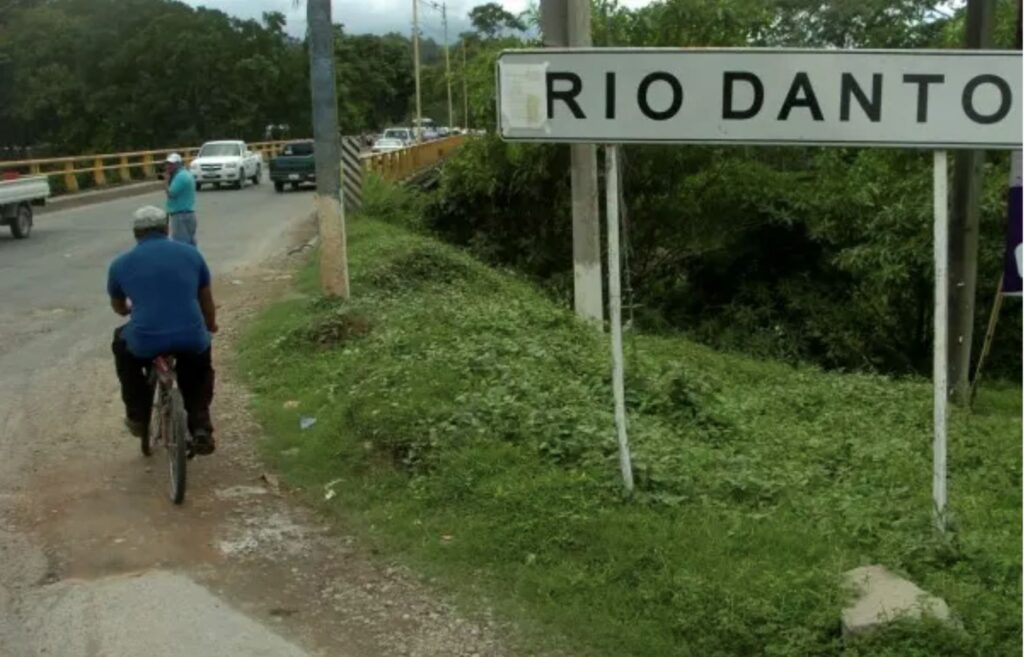
Not much more than a month ago, Elisa came to Loma de Luz looking for an end to her several-years-long nightmare. Her name might not exactly be Elisa, but she is a real person who, about three years ago, was standing at a bus stop on the west side of La Ceiba at the Rio Danto bridge. She was on her way to work, waiting with her cousin and another woman who were seated on the bench in front of her. I don’t know much about her life before that day, but it seems that, up to then, she was no more and no less acquainted with suffering than what is common to the human condition.
Standing there, chatting with the two women and waiting for the bus with her back toward the road, Elisa was completely unaware that the driver of a commercial truck had made the disastrously bad decision to pass the traffic leading onto the bridge by using the shoulder as an optional passing lane. The truck was what people in La Ceiba call a “Quesero,” a small utility truck used to transport dairy products—specifically fresh cheese (*queso) and curd (cuajada). The driver accelerated down the nearly nonexistent shoulder until he ran out of road at the bridge and toppled down the embankment. He rolled right over all three women. The tumbling Quesero first hit Elisa, knocking her into the air and far down the embankment, nearly into the river. It then landed on her cousin and the neighbor. The cousin was killed instantly. The neighbor died on the way to the hospital. The driver survived with no serious injuries. And Elisa? She was alive, but unconscious and badly injured, with a crushed pelvis and a fractured right hip.
She was taken first to Hospital Atlantida, the public hospital in La Ceiba. At Atlantida they did the usual “casi nada” (next to nothing) and decided to send her to Hospital Mario Catarino Rivas in San Pedro Sula. Catarino Rivas is the largest public hospital on the North Coast and the second largest in the country.
At Catarino Rivas, Elisa regained consciousness, had a plate put in her pelvis, had nothing done for her right hip fracture, and stayed hospitalized in pain for several weeks. After discharge and a month in bed with a shattered hip still untreated, she was weak, in constant pain, and had lost her job because she could no longer work. She had no money and only the support of distant relatives, friends, and neighbors to live on. But they were good relatives, friends, and neighbors. They gathered together just enough money for Elisa to undergo a right hip replacement.
Since none of the orthopedic surgeons at Hospital Atlantida felt they could do it, she underwent the surgery at a private hospital in La Ceiba. Sadly, the expensive prosthetic hip became infected almost immediately. It needed to be removed urgently, because an ocean of antibiotics will not cure an infected implant like that. It has to be removed. Yet the hospital and the surgeon who put it in demanded almost as much money to remove the infected prosthesis as it had cost to put it in. Having not yet heard of Hospital Loma de Luz, Elisa returned to the public hospital, begging to have the infected hip removed.
After weeks of delay, she finally underwent surgery there. The good part was that they removed most of the prosthetic hip. The bad part was that they also broke her femur during the operation.
I don’t mean her femur up near the hip; I mean the other end of her femur, down near the knee. It is really hard to break an otherwise uninjured distal femur during surgery on the hip. For the life of me, I cannot imagine how they managed to do that. As if that weren’t inconceivable enough, I cannot understand why they didn’t fix the new fracture they had just created. But they didn’t.
And one more thing… I mentioned that they removed “most” of the prosthetic hip. Under such circumstances, the point of the operation is to remove all of the prosthesis and all of the foreign material, including the bone cement. They didn’t do that either. The remaining bone cement became the nidus of infection, and pieces of it came out a little at a time as the wound continued to drain for the next two years.
Then she heard of Hospital Loma de Luz from a visiting friend of a neighbor. By the time I first saw Elisa just over a month ago, she had been suffering first from the original trauma, then from the subsequent operations and infections, and finally from a badly displaced, untreated distal femur fracture—for three years. In constant pain and with a chronic infection, she had not walked, worked, or been able to care for herself for three years. She had lost not just any hope of gainful employment, autonomy, or security, but family members, friends, and much of her sense of self-worth. She openly wondered why she had not died with her cousin and wished that she had.
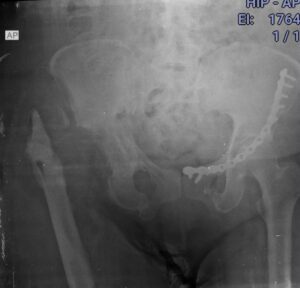
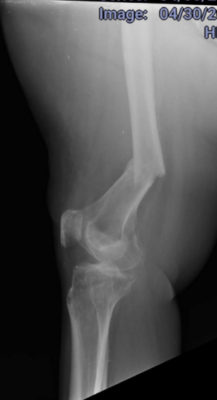
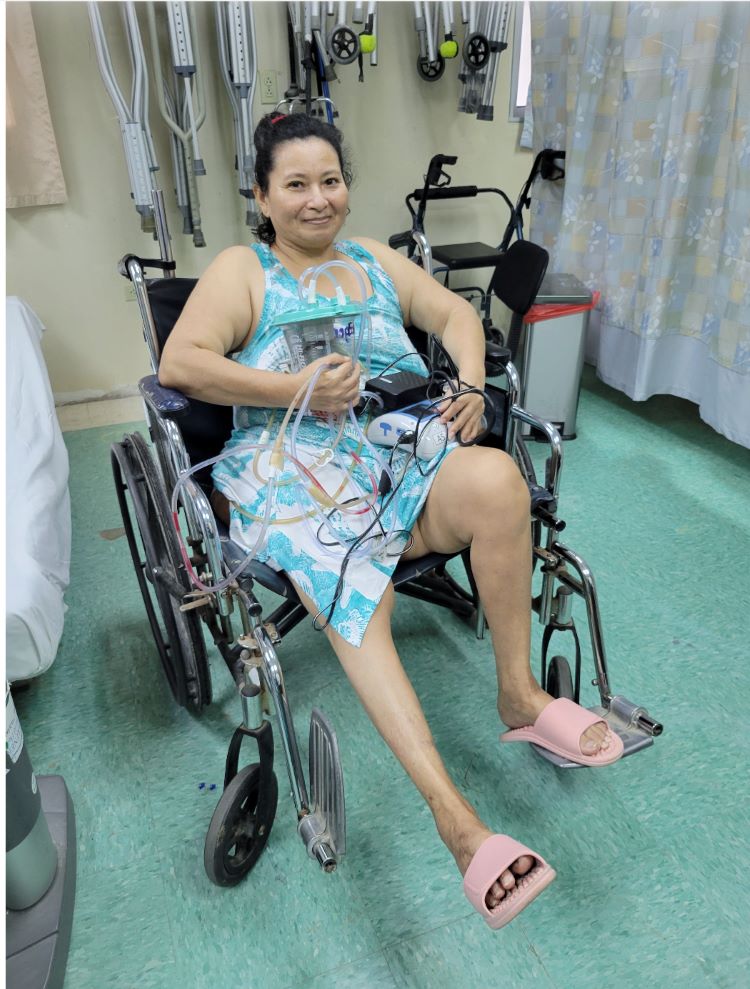
At Loma de Luz, though, she’ll tell you she was treated differently from anywhere else she had been. People treated her like a person, like they would a family member. They listened to her, prayed with her, and encouraged her. The place was, as she put it, “precioso… y limpito, y todos parecen tan felices” (so beautiful, so clean, and everyone seems so happy). We’ll take the compliment to heart, even knowing that the bar had not been set very high anywhere else she had been.
So, we removed the rest of the foreign material and cleaned out the infection. We’ll fix the distal femur fracture later. First, you have to deal with the ongoing infection. We’re doing this with a Wound VAC system, an approach that requires her to stay close to the hospital and receive a lot of ongoing hands-on care. She is staying in our hospital outpatient “Casitas.” Nelly and Seve in Terapia, the wound clinic, are taking great care of her. Pastor Javier visits her nearly every day. People bring her clothes and food, and she is steadily healing. Elisa is a believer. She came to follow the Lord in desperation in the midst of her suffering.
Still, when asked if that “made it all worth it,” she’s not sure how to answer the question. As our chaplain, Pastor Javier, related it: “She has the conviction of her salvation, but at the same time laments her condition.” So she’s not dancing yet, but she’s on her way up. And she has one more thing in her corner.
When Elisa considers the question of whether her newfound faith somehow made all she has been through worth it, she looks to her friend for confirmation. I haven’t mentioned Elisa’s friend until now, but she has been there pretty much all along. She is the same friend who was with her when I first saw her. She is the only person who was waiting when I went out to talk to the family after surgery. She doesn’t say much. She mostly just nods her affirmation, but her posture leaves no doubt: she is there for her friend. When Elisa looked to her to see if her honest answer was good enough, her friend simply returned her gaze and nodded.
At Loma de Luz, we see a lot of violence, trauma, and abuse. We see a lot of loss and suffering. A young man loses a hand. A young couple loses a baby. An old man loses a foot to diabetes. And at Loma de Luz, we can do a lot to alleviate suffering. That’s what we do every day. That’s a large part of why we’re here. But sooner or later, all of us are touched by suffering. And a lot of the time, the pieces aren’t so easily put back together. What can any of us do about it? Well, we can always be ready to give every man an answer for the hope that is within us (I Peter 3:15). We can rejoice with those who rejoice and grieve with those who grieve (Romans 12:15). There is that.
And there is one more thing. It is the one thing Job’s counselors got right. When they came to their friend who was suffering and in great sorrow, they sat with him for seven days and seven nights. They saw how great his suffering was, and for seven days they said nothing. That is what Job needed more than anything. He didn’t need lectures on blame or instruction about how God works. He needed someone to sit by his side and share in his suffering. They got the first part right. If they had stuck with that, I expect that instead of His anger burning against them, the Almighty might have commended them for it.
If they had just sat with their friend…and kept quiet.
In God's Grace,
~Jefferson McKenney, M.D.
For at least 5 years now, the Cornerstone Foundation has been discussing and planning a new facet of the overall ministry: passing on and teaching what we have learned over the past 30 years. We envision a campus at the Cornerstone Foundation property offering training seminars to “developed world people” (like those from the USA) in the practical skills and knowledge needed to begin new work in resource-poor settings in developing nations AND a Loma de Luz campus offering training and certifications in “first-world requirements” (medicine, teaching, engineering, etc.) to young Honduran professionals preparing to become leaders in the global marketplace. Those plans are steadily moving forward. What follows is a brief Project Description prepared by Third Lens, a Christian Building Ministry partnering with us in this effort.
Why am I presenting this here?
1.) Because you, the faithful supporters of the Cornerstone Foundation/Loma de Luz, have been vital partners in this work from the beginning; and
2.) so that you are aware of this new ministry direction and can pray for the Lord’s guidance, blessing, and development of this undertaking. May our Lord bless you in it, and may His kingdom be increased and strengthened.
In God's Grace,
~Jefferson McKenney, M.D.
A Unified Vision for Sustainable Impact
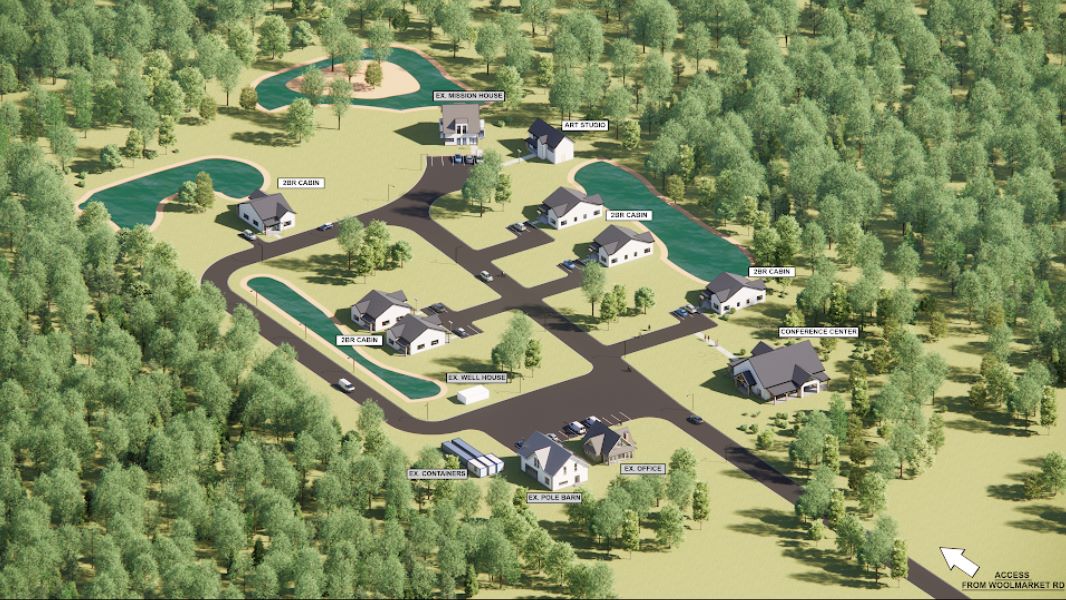
The Training & Conference Center Partnership is a long-term investment in the people who make sustainable ministry possible. Rooted in 1 Peter 4:10–11, this two-campus initiative will equip missionaries, healthcare professionals, and nonprofit leaders with practical skills, knowledge, and resources to serve effectively in developing-world environments.
Woolmarket Campus | Biloxi, Mississippi
The 11.5-acre Woolmarket Campus will serve as a U.S.-based training and conference center for missionaries, nonprofit leaders, ministry teams, and international partners. Drawing on decades of ministry experience in Honduras, it will provide practical training in infrastructure, water and energy systems, agriculture, communications, organizational leadership, fiscal stewardship, government and nonprofit coordination, and sustainable ministry operations. Planned facilities will provide space for training, mentorship, lodging, and collaboration, including opportunities for exchange with Honduran professionals.
Loma de Luz Campus | Balfate, Colón, Honduras
While Biloxi prepares leaders for the field, the Loma de Luz Campus will strengthen professionals serving within it. Integrated into the Hospital Loma de Luz campus, it will provide hands-on clinical education, mentorship, professional development, and leadership formation for Honduran healthcare professionals. Training will include emergency and critical care, teaching, engineering, and medical professional certifications, point-of-care ultrasound, nerve blocks, ventilator/BiPAP management, Doppler arterial assessment, and complex medical emergencies.
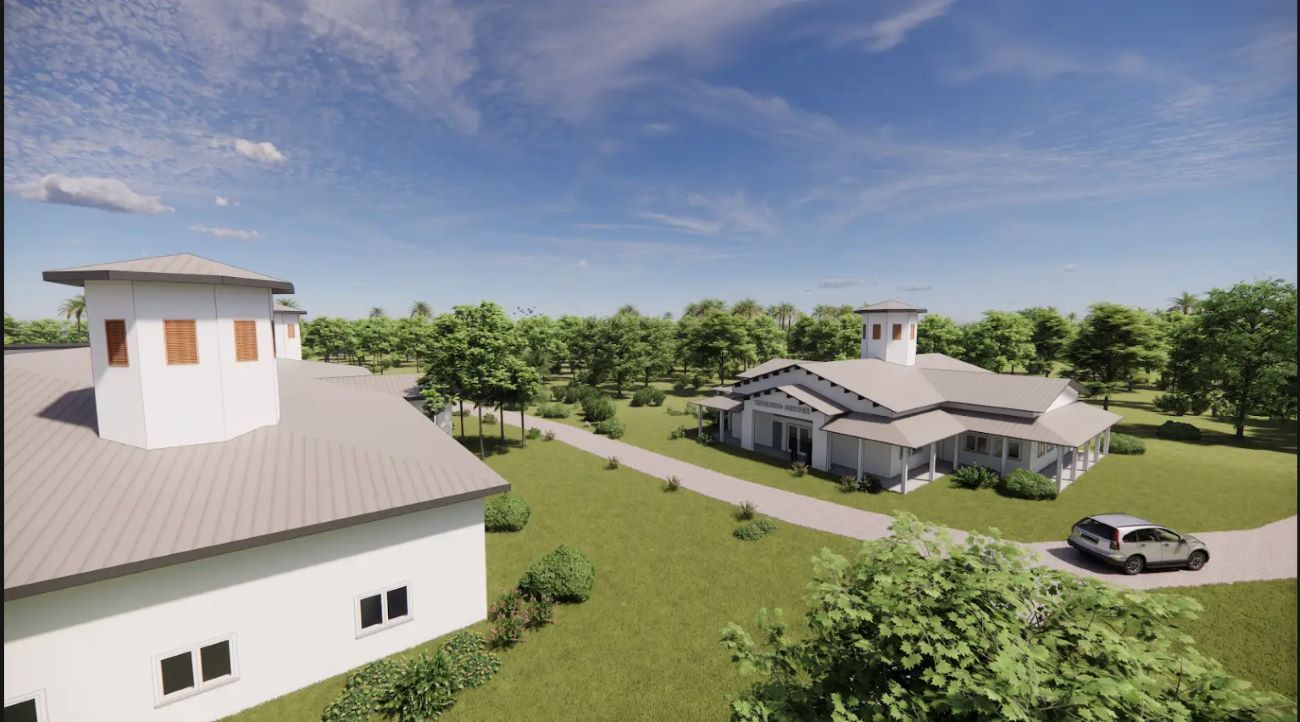
Together, the two campuses create a sustainable cycle of preparation, service, mentorship, and leadership development—equipping people before they enter the mission field, strengthening them while they serve, and empowering local professionals to carry the work forward.
News & Needs
1 – The Road to Loma de Luz: Balfate’s mayor recently announced that Congress has funded paving the road from Jutiapa to the Hospital over the next four years. We’ve heard “they’re going to pave the road” for 25 years, so some skepticism is warranted. Still, an official, funded announcement with a timeframe means we must plan ahead. A paved road would ease travel to La Ceiba but could also bring more vehicle and motorcycle trauma, increased patient demand, more applicants to El Camino, greater government scrutiny, and potentially more organized crime (funny how those two go hand in hand). We’ll need to grow to meet these needs. Please pray for the Lord’s provision of workers and finances, and the wisdom to steward them well.
2 – Hospital Staffing Needs: Loma de Luz urgently needs full-time, long-term missionary doctors in Internal Medicine, Family Practice, and Ob-Gyn. Anticipating expansion, we also expect to need another Surgeon (General or Orthopedic), another Anesthesia Provider (CRNA or Anesthesiologist), and a long term Medical Director.
3 – El Camino Teachers Needed: El Camino Bilingual School now has 211 students and continues to grow. Our staff includes 11 Canadian and US missionary teachers and 11 Honduran teachers and aides. Several missionary teachers will be leaving soon, creating openings for an Elementary, Science, Art and Music (“Specials”), and Bible Teacher for the 2027-28 school year. Interested applicants can visit Cornerstone Foundation and complete the Long-term Volunteer Application.
4 – New School Website: El Camino now has its own website: elcaminohn.org. We’re grateful to Angela Desire, one of our excellent, faithful, and capable missionary teachers, who did a great job creating it.
5 – Speaking: If you would like Dr. McKenney to speak to your church or civic group about the work of the Cornerstone Foundation / Loma de Luz in 2027, please let us know at [email protected]
6 – Please Pray for Danely: Many of you know and love Danely, who was born with Xeroderma Pigmentosa and came to Casa de Niños at age six. Now 19, she has very advanced head and neck cancer. Please pray for Danely, the wonderful staff caring for her, and all her “brothers and sisters” at the Children’s Center. This is a beautiful but very difficult passage for them all.
Never doubt that your prayers make an impact. Thank you for all the ways you have made a difference to so many, including Elisa and Danely.
~Sally Mahoney for the Cornerstone Foundation